Hardware
Microsoft Unveils Maia 300 AI Chip for 2027 Rollout
October 12, 2026
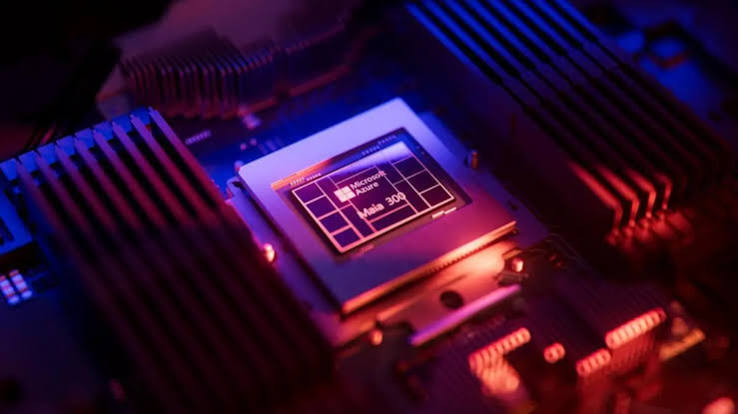
Read Original: ReutersMicrosoft has unveiled Maia 300, its third-generation custom artificial intelligence processor, as it looks to control the cost and energy requirements of running AI services. The announcement puts Microsoft's in-house silicon strategy in the spotlight at a time when demand for AI computing continues to accelerate.
According to Reuters, Microsoft plans extensive deployment of the new chip beginning in 2027. The company has discussed installations that could eventually exceed one million processors, though those are forward-looking plans rather than hardware already operating at that scale.
The Maia 300 uses a chiplet architecture, combining advanced two-nanometre compute components with three-nanometre components for supporting functions. That design is intended to match expensive manufacturing processes to the tasks that benefit most from them, rather than building every part of a processor on the same node.
Microsoft says its system could deliver approximately 40 percent more useful computing per megawatt than leading GPU-based alternatives. That is a company performance claim, not a guarantee of identical results across every AI workload. The platform is being designed around server racks containing 96 chips, with power and cooling planned as part of the broader system.
Why does this matter? Running AI models after training, a process known as inference, is becoming a major ongoing expense for cloud providers. Even modest improvements in output per watt could have significant effects when repeated across thousands of servers.
The announcement also illustrates a wider shift among large technology companies. Rather than relying exclusively on general-purpose accelerators from Nvidia and AMD, cloud providers increasingly design chips optimized for their own services, software and data centers.
Microsoft's plans do not mean third-party GPUs will disappear from Azure. Different AI workloads have different hardware requirements, and companies may continue buying external processors while expanding custom infrastructure.
For developers and businesses building on Microsoft services, the near-term takeaway is strategic rather than an immediate product change. Greater control over inference hardware could eventually affect cloud economics, capacity and the performance of AI-powered applications.
The central question is whether Microsoft can turn ambitious performance and deployment targets into reliable, economical production systems in 2027.
Source:Reuters