Hardware
Arm Ships Its First In-House Chip After 35 Years of Licensing
March 25, 2026
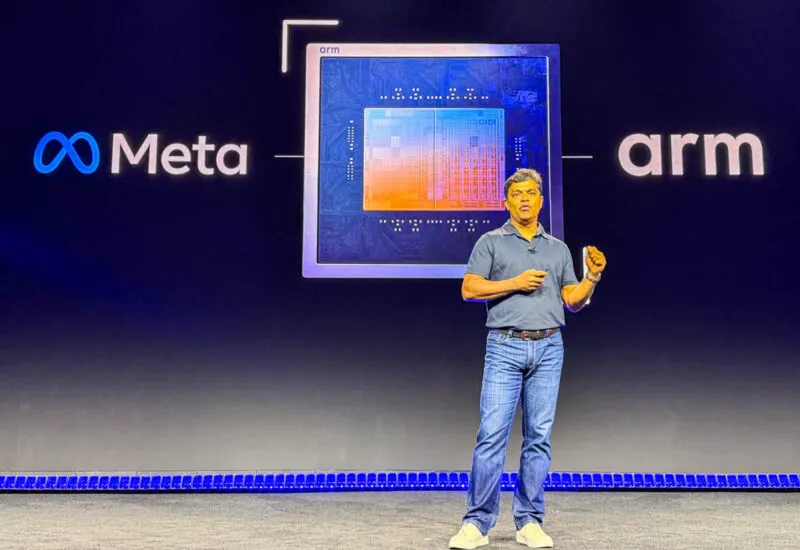
Read Original: CNBCArm Holdings unveiled the AGI CPU at an event in San Francisco on March 24, marking the first time in the company's 35-year history that it has produced and sold its own chip rather than licensing designs to other manufacturers. Meta signed on as the launch customer and co-development partner, with OpenAI, Cloudflare, SAP, and Cerebras also committing to early deployments. The chip is built on TSMC's 3-nanometer process and is available to order now, with broader availability expected in the second half of 2026.
The AGI CPU packs up to 136 cores, draws 300 watts, and is optimized specifically for AI inference in data centers. Arm claims more than double the performance per rack versus x86 processors from Intel and AMD, and says the chip delivers up to 50% gross profit margins. CEO Rene Haas projected the chip will generate $15 billion in annual revenue by 2031, with total company revenue reaching $25 billion, up from just over $4 billion in 2025. The day after the announcement, Arm stock jumped 20% as analysts at Citi called it "the most significant shift in the company's history." Arm has spent $71 million building a dedicated chip lab in Austin, Texas, where a team that started small has grown to over 1,000 people.
The move disrupts the chip industry in a specific way: Arm's entire business model was built on neutrality. Apple, Qualcomm, Google, and Amazon all build their own processors using Arm's designs. Those companies are now dealing with a supplier that has become a competitor. Arm is framing the AGI CPU as one option in a broader ecosystem, where companies can still license Arm's designs or buy the finished chip outright. The timing is also deliberate. A shortage of CPUs has emerged in early 2026, with Intel and AMD reporting extended wait times for customers in China. Arm is entering a market with constrained supply and surging demand from agentic AI workloads.
For developers and businesses in Nigeria building on cloud infrastructure, what Arm is doing matters. The underlying processors that run AI services are shifting. More efficient chips mean cheaper inference costs over time, which affects the pricing of every AI tool and API you use.
The hardware decisions being made in 2026 will determine what AI infrastructure costs for the next decade.
Source:CNBC